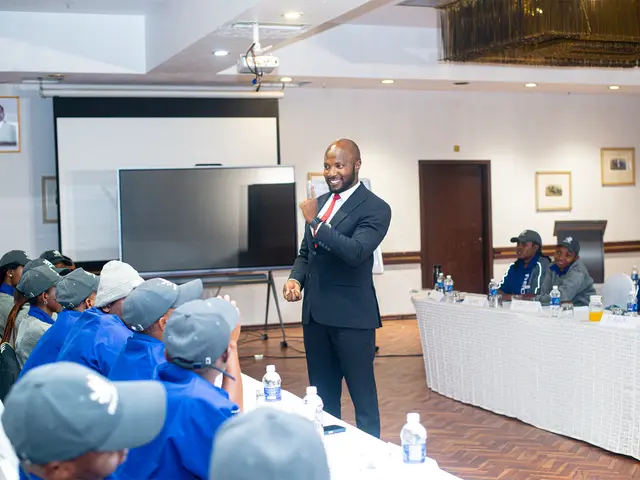
The Chartered Vendor — Sales Training and Business Advisory Team
Key takeaway
Choose one reachable buyer group, make a clear offer and work a daily routine of prospecting, demonstrations and follow-up. Track real buying and delivery feedback to build a repeatable sales system.
A founder sat outside a prospect’s office in Harare for nearly two hours.
The meeting had moved twice. The receptionist had stopped making eye contact. His phone battery was dying, and he was already rehearsing the excuse he would give himself on the way home.
Then the prospect walked out. Instead of launching into a long speech about his business, the founder asked one question: “What is costing you the most time in this area?”
That is where selling starts.
If you are looking for a startup consultant Zimbabwe entrepreneurs can use in practice, start with a repeatable routine: find the right prospects, speak to them, demonstrate a useful result, make a clear offer and follow up. Your first 100 customers begin with learnable sales habits, not a glamorous pitch deck.
That is the work startup advisory should support: test the business model, choose a route to market and build a sales process before the business consumes its available working capital.
Your first 100 customers are not a social-media milestone. They are proof that somebody will pay.
Stop Selling to “Everyone in Zimbabwe”
I hear this often: “My product is for everyone.” No, my friend. Everyone is not a market. Everyone is an excuse to avoid choosing.
A startup needs one reachable buyer first. Not because other people will never buy, but because you need to learn one customer’s language before you spread yourself across the streets.
Choose a group you can find without a helicopter or a government tender. For example:
-
Harare salons that need reliable stock or bookings.
-
Bulawayo engineering firms that need a specific supply item.
-
Tuckshops that need regular deliveries.
-
Small clinics that need a simple admin service.
-
Small manufacturers that need help finding buyers.
Pick one group and one problem.
If you sell cleaning products, do not begin with “all homes and businesses.” Start with, “I supply small offices in Avondale and Belgravia that are tired of running out of hand soap and bin liners.” Now you know where to walk, who to call and what question to ask.
Define one buyer in writing
Write down these five things before you print flyers or boost a post:
-
Who makes the buying decision?
-
What problem annoys them enough to pay?
-
Where can you find them this week?
-
What do they currently use or do instead?
-
Why should they try you now?
The fifth question matters because a customer already has a way of coping. It may be poor. It may be expensive. But it exists.
Your job is to give them a good reason to change.
Build an Offer People Can Understand Quickly
A customer should understand what you sell in one breath. Not your vision. Not your company history. Not the twenty services you hope to add next year.
What do you do? For whom? What happens after they pay?
Try this structure:
“I help [specific buyer] get [specific result] through [what you provide].”
A founder selling bookkeeping support could say, “I help small Harare retailers organise their daily sales records so they know what they are making before month-end.”
That is clearer than “We provide business support services.” Nobody wakes up looking for business support services. They wake up worried that cash is disappearing and they cannot explain why.
Price without creating confusion
In Zimbabwe, careless quoting can kill a sale before it starts.
Zimbabwe currently permits domestic transactions in foreign currency and ZiG, subject to applicable exchange-control and sector rules. The Reserve Bank of Zimbabwe’s March 2026 guidelines describe the transition toward exclusive local-currency use as conditional on macroeconomic stability, not an automatic change on a fixed date.
So do not act as if USD is the only currency that exists. Do not act as if every customer wants the same payment channel either.
Every quote must state:
-
The currency, USD or ZiG.
-
The payment method.
-
What is included.
-
Delivery or collection terms.
-
How long the quote is valid.
If you quote a product over WhatsApp and later reveal a separate delivery charge, you have created a dispute before delivery. Put every material term in the first quotation.
Be plain and complete.
For example: “The quotation covers the listed products and delivery within the agreed Harare area. Payment is accepted by the stated bank or mobile-money method in the currency shown. This offer remains valid until Friday at 16:00.”
When quoting in ZiG or another permitted currency, use the business’s approved pricing and payment procedure. Do not publish fixed conversion examples that may quickly become outdated. Check current RBZ guidance where foreign-exchange treatment matters.
Clarity protects your money and the customer’s trust.
Make a First-100-Customers List
| Stage | Record | Next action |
|---|---|---|
| Identify | Buyer, sector, location and problem | Confirm the decision-maker |
| Discover | Customer’s current solution and unmet need | Ask a relevant question |
| Demonstrate | Sample, trial or service result delivered | Request a decision |
| Follow up | Date, objection and agreed next contact | Act on the promise |
| Learn | Won/lost reason and repeat/referral potential | Improve the offer and route |
Most founders do not have a customer problem. They have a list problem. They post online, wait for likes and conclude that there is no demand—before speaking to enough relevant prospects to test the offer.
Start with a list of 100 possible buyers. Not 100 guaranteed sales. One hundred names or businesses you can contact.
Use a notebook, spreadsheet or simple phone list. Record the business name, contact person, number, location, problem, last contact date and next action.
Your list can come from walking through industrial areas, asking suppliers, visiting shopping centres, business WhatsApp groups, church networks, former colleagues and existing customers.
Network properly. Do not just collect numbers like trophies. Ask, “Who else has this problem?”
Worked example: a Harare office-supply seller
Consider a Harare seller holding a small stock of cleaning supplies and stationery. The products are sitting in storage, and she needs to learn what nearby offices will actually buy instead of ordering more inventory on a guess.
She chooses ten offices around her area instead of advertising to every company in the country. She visits, asks who buys consumables and leaves a simple one-page price list that states whether each price is in USD or ZiG, the payment method and delivery terms. She follows up two days later with one question: “Which items do you run out of most often?”
If three offices buy small weekly orders, she learns what actually moves. If nobody buys, she should not rush to order more stock. She should first find out whether her prices, pack sizes, delivery promise or target buyer are wrong.
Unsold stock is a lesson in customer discovery, but only if the founder records what buyers need and acts on it.
Work a Daily Sales Routine
Your first 100 customers will not arrive because you felt motivated on Monday.
They come because you execute a daily routine even when the receptionist is cold, the prospect says “send me your profile,” and your cousin asks why you are still walking around with samples.
Set daily activity targets you can control. For example:
-
Ten new prospect contacts.
-
Five follow-ups.
-
Two customer visits or demonstrations.
-
One direct request for the order.
These are not magic numbers. They are a starting discipline. Adjust them according to your product, travel costs and sales cycle.
If you sell a low-cost product, you may need many more conversations. If you sell a large industrial service, you may need fewer but deeper meetings.
The rule stays the same. Do something that puts you in front of a buyer every day.
Calls, visits and WhatsApp all have a job
A call gets attention. A visit builds trust. A WhatsApp message makes follow-up easy. Do not use one method for every situation.
If you need to demonstrate a food product, take samples. If you sell a service to a clinic, ask for a short meeting with the decision-maker. If a busy procurement person asks for details, send a clean WhatsApp message with a clear quote, then set the next follow-up date.
Do not send “Good morning, kindly assist.” That message does not tell the buyer what help is being requested. Say what you sell, why you contacted them and what you want next.
For example: “Good morning, Ms Ncube. I supply refill packs for small offices in Bulawayo. I am checking whether you have a supplier for hand soap and bin liners. May I send a price list for your monthly use?”
That message respects people’s time.
Demonstrate Before You Explain Too Much
People trust what they can see, test or compare.
A demonstration does not need a hotel conference room and branded banners. It can be a sample, a short trial, a before-and-after picture, a product comparison or a ten-minute walk-through.
If you sell a service, show the customer the first small result they will receive. If you sell a product, show them how it works in their setting.
Worked example: a Bulawayo maintenance service
Take an illustrative founder offering equipment-maintenance checks to small Bulawayo engineering firms. He initially tells prospects he can “improve operational efficiency.” It sounds respectable, but it does not identify the maintenance problem he will solve.
He changes the offer. He visits workshops and demonstrates a practical inspection checklist showing visible faults, urgent repairs and parts required. His proposal explains the scope, the currency and the payment terms without leaving the buyer guessing what the inspection includes.
One workshop does not buy immediately, but the owner asks him to return after month-end. The founder records the date and follows up as agreed. Next time, he should lead with the costly downtime problem the owner mentioned, not a generic speech about maintenance.
Sell the pain you heard. Not the brochure you memorised.
Ask for the Sale
Many founders can explain a product for twenty minutes. Then they leave without asking the customer to buy. Why?
Fear.
We call it being polite. We call it relationship building. Sometimes it is just fear wearing a tie. After you have understood the problem, presented the offer and answered the real questions, ask directly:
“Shall I prepare the invoice?”
“Would you like delivery on Tuesday or Thursday?”
“Can we start with the smaller package this month?”
“Who needs to approve this before we proceed?” A no is useful. It tells you where you stand. A vague “I will get back to you” is not a sale. Record it, set a follow-up date and move on with your day.
Follow Up Like a Professional
The money is often in the follow-up. Not every prospect is ready on the first call. They may have stock, a delayed payment, a manager away, or a genuine timing problem.
That does not mean you disappear. Agree on the next step before you end the conversation. Then do what you said you would do.
If they said call on Friday, call on Friday. If they asked for a revised quote, send it that day. If they asked for a sample, deliver it when you promised.
Consistency is rare. That is why it sells. Keep your follow-up simple:
“Good afternoon, Mr Dube. We spoke on Tuesday about the monthly supply. You asked me to check back today. Have you decided on the order, or is there one concern I can clear up?”
That is better than sending twelve “Just checking in” messages.
Turn Every Customer Into a Hunting Ground
Customer number one can help you find customer number two. After delivery, ask whether the customer got what they expected. Fix problems quickly. Then ask for an introduction.
Not a vague request for “referrals.”
Ask specifically: “Which other salon owner around here buys these products every month?” Or: “Do you know another workshop that has the same maintenance issue?”
Your people know people. But they cannot refer a business they do not understand or trust. This is why delivery matters. A late delivery, unclear invoice or surprise charge does more than lose one sale. It closes a network door.
For your first 100 customers, track where each customer came from. Walk-in, referral, WhatsApp, visit, call or demonstration. You are looking for the channel that brings serious buyers, not applause.
Do Not Build a Campaign. Build a Sales System.
Getting 100 customers is not one campaign you run once and frame on the wall. It is the beginning of a system. Every week, review:
-
How many new prospects you contacted.
-
How many meetings or demonstrations happened.
-
How many quotes you sent.
-
How many follow-ups you completed.
-
How many customers bought and referred somebody else.
You do not need complicated software at the beginning. A disciplined spreadsheet can expose the truth.
If you contacted 50 prospects and sent no quotes, your opening conversation is weak. If you send many quotes and get no orders, your offer, price or trust level may be wrong. If customers buy once but never return, inspect your delivery.
Numbers do not insult you. They report.
This is where a startup consultant Zimbabwe founders trust can add value. Good startup advisory should not just give you a motivational speech. It should help you test your offer, choose a market, build the sales routine and measure what is actually happening.
Frequently Asked Questions
How long should it take to get my first 100 customers in Zimbabwe?
There is no honest fixed timeline. It depends on your price, product, buyer, delivery capacity and how often you speak to real prospects. Focus first on daily sales activity and customer feedback, because those are the inputs you control.
Should I sell in USD or ZiG?
Zimbabwe currently permits transactions in foreign currency and ZiG, subject to applicable rules. State the currency, payment method, inclusions, delivery terms and quotation validity clearly. RBZ’s March 2026 guidance describes the transition toward exclusive ZiG use as conditions-based rather than tied automatically to a fixed date.
Do I need to run paid adverts before approaching customers directly?
Not necessarily. If you are still testing who will buy and why, direct calls, visits, demonstrations and WhatsApp follow-ups usually teach you more quickly. Paid advertising can come later when your message and offer are already working.
What if prospects keep saying they will get back to me?
Ask for a specific next step and date. If they still avoid a decision after a proper follow-up, ask what is stopping them: price, timing, trust, approval or no real need. Then improve your approach or move to the next prospect.
Your first 100 customers will not come from another logo or planning meeting alone. They will come from repeated, relevant conversations backed by dependable delivery.
They are waiting for somebody to understand their problem, make a clear offer and follow through.
If your team needs a sales system that can work in the real streets of Zimbabwe, request a sales training or consulting proposal. How many real customer conversations did you have this week?