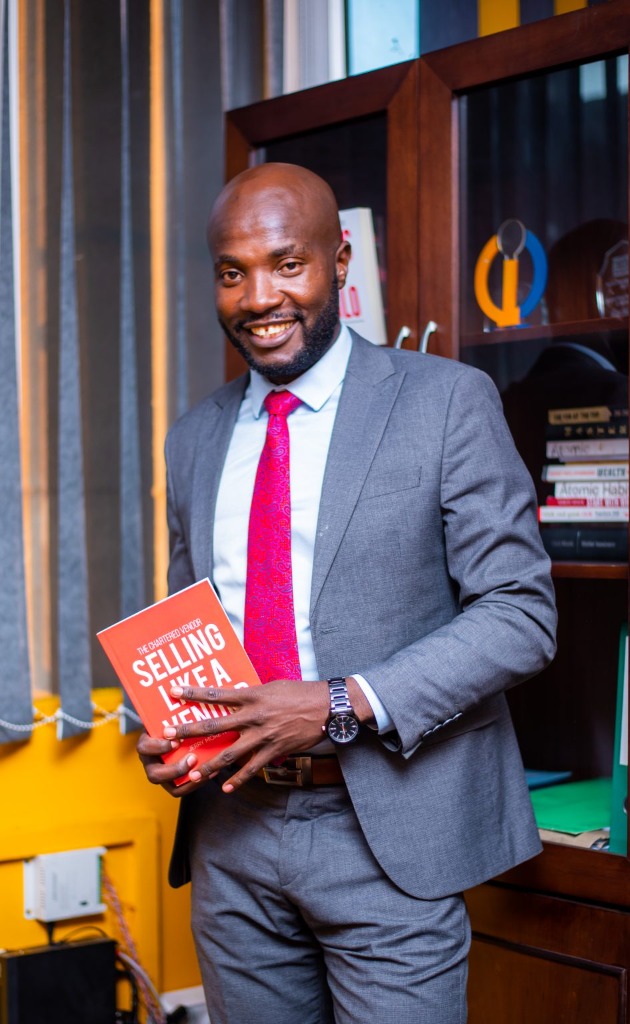
I want to start this article by telling you something that might surprise you.
I used to be painfully shy.
When I was growing up, speaking in public felt like speaking with a gun in my mouth. I finished two years at a mixed school without a girlfriend, not because I was unpopular, I was actually the basketball captain, but because I could not find the courage to approach anyone. I was selected for my school’s quiz team and won at district level, but we lost at provincial because I kept thinking of the right answers without raising my hand. Shyness was costing me everything.
Then I became a vendor.
I sold sweets, bananas, doughnuts, and airtime on the streets of Budiriro for five years. No training. No script. No mentor. Just me, a market stall, and the daily pressure of needing to sell enough to survive. Those streets forced me to talk to strangers. They forced me to negotiate. They forced me to handle rejection, think on my feet, and build relationships with people I had never met.
By the time I left vending, I was a different person. And that transformation became the foundation of everything I have built since then, The Chartered Vendor, M&J, 20+ years of training businesses across 15 African countries, four books, 50,000+ hours of training delivered, and a 4.9 out of 5 client satisfaction rating across 500+ business transformations.
Sales did not just give me a career. It gave me a life.
If you want to know how to succeed in sales as an African professional, this is the complete guide. Built on what I have lived, not what I have read.
The First Truth About a Sales Career Most People Miss
Before I give you any strategy or technique, I need to address the belief that is holding more African salespeople back than any skill gap ever could.
Most people in this profession do not take it seriously.
When I ask people at my seminars to raise their hands if they are in sales, 15 to 30% put their hands up. I ask again. Maybe 50% raise their hands. I keep asking until people understand what I am getting at. Everyone is in sales. Politicians sell manifestos. Pastors sell faith. Parents sell discipline to their children. Job seekers sell themselves in interviews.
But the deeper problem is not that people do not recognize they are selling. The problem is that the people who are officially in sales treat the profession like a pastime instead of a career.
Think about Lionel Messi and Cristiano Ronaldo. They are paid incomparably more than most footballers not because they were born with more talent, but because they treat playing football as a full-time professional commitment. They train when others rest. They analyze when others celebrate. They improve when others settle.
Then there are Museyamwa and Mhofu, who play social football on Sundays when they feel like it, and wonder why their careers never took off.
Ask yourself honestly: which category are you in? Are you a professional in sales, or are you an amateur pretending?
The moment you decide to treat sales as a serious, skilled profession that demands daily investment, everything changes.
How to Build the Foundation for a Successful Sales Career
Start With Attitude. Everything Else Follows.
I have trained thousands of salespeople across Africa. I have hired hundreds. And I have learned something that I will stake my reputation on.
Attitude matters more than qualifications. More than product knowledge. More than experience. More than everything.
A great attitude is more important than a great product. People will pay more for a pleasant presence than for a good product. I have seen average salespeople with exceptional attitudes massively outperform technically brilliant salespeople who walk into every client meeting already half-defeated.
When I was selling bananas in Budiriro, I had competitors on every corner selling the same products, sometimes cheaper than me. Yet I consistently captured more of the market. Not because of price. Not because of product. Because I was the most positive person on that street. While other vendors were complaining about the economy and the government, I was focused on the opportunity in front of me.
Zimbabwe’s economy has been difficult for a long time. I know this personally. But the salespeople who succeed here, who truly thrive, are the ones who refuse to make the economy an excuse. They see problems as opportunities. They look at the same difficult environment as everyone else and find the deals everyone else is missing.
Here is how I maintain my attitude every single day. I wake up at 4:30am and exercise for 30 minutes to an hour while listening to something motivational. I write my goals every morning and every evening before I sleep. I rate my own attitude on a scale of one to ten regularly and take corrective action when I notice it slipping. I surround myself with people who carry positive energy and I am deliberate about removing negativity from my environment.
My car is a mobile library. Every drive is a training session. I have learned things in that car that no university would have taught me.
You cannot control the economy. You can control your attitude. Start there.
Take Full Responsibility for Your Results
The single most transformative decision I ever made in my sales career was the day I stopped blaming anything outside of myself for my results.
When I became a vendor, I knew with absolute clarity that if I did not sell, I did not eat. There was no manager to blame. No bad territory to complain about. No unfair quota to point to. It was me and the market. If the day was good, it was because of me. If the day was bad, it was also because of me.
That clarity is a gift that full sales ownership gives you. When you accept that your results are yours, you stop wasting energy on excuses and start spending that energy on solutions.
At my seminars, when I ask salespeople why they are not selling more, most point to the economy, the competition, the product, the pricing. They almost never point to themselves. But the economy is the same for everyone. The competition is the same for everyone. The salespeople who are winning in this economy right now are winning in the same conditions you are complaining about.
Take 100% responsibility. It is the only path to 100% control.
The Non-Negotiable Skills Every Sales Professional Must Develop
Prospecting: Your Pipeline Is Your Lifeline
In sales, the pipeline is everything. An empty pipeline is a career in decline.
I teach my team to prospect every single day, minimum two hours, no exceptions. We reserve that time in the morning and protect it like it is sacred. Because it is. Prospecting is the engine of every sales result you will ever achieve.
Your powerbase is where you start. Your relatives, friends, churchmates, neighbors, former classmates. These are people who want to see you succeed and are predisposed to engage with what you are selling. When I launched M&J in 2015, my powerbase was my survival. When I published The Chartered Vendor, I started by selling to every person in my phone. I had over 15,000 contacts. I messaged them all. I sold thousands of copies to people who knew me and trusted me before they even opened the book.
Do not be shy about leveraging your powerbase. If your church members and relatives do not know what you sell, you are running a secret organization. And secretive organizations do not grow.
Beyond your powerbase, prospect consistently and systematically. Target decision makers. Know your ideal customer profile and go after it relentlessly. Track every prospect in a CRM so nothing falls through the cracks.
Trust: The Currency That Closes Every Deal
Here is a truth that took me years to fully understand.
People are not buying your product. They are buying you. They are buying your credibility. They are buying the trust they have in your ability to deliver what you are promising.
Most sales are lost not because of price, not because of competition, but because of a lack of trust. Often the customer cannot even articulate it. They just feel uncertain. And that uncertainty makes them hesitate, stall, and eventually find someone they feel more confident in.
Building trust requires consistency. Show up when you say you will. Deliver what you promise. Be transparent about what you can and cannot do. Use testimonials and social proof so the customer can validate your claims through third parties rather than having to take your word for it.
I once had a client who questioned my company’s credibility mid-project when a key employee left. I had to fight to restore that trust through consistent communication and eventually delivered the project. But I learned from that experience. Credibility is fragile. Protect it at every moment of every engagement.
Following Up: Where Most Salespeople Die and Champions Are Made
Let me give you numbers that should permanently change how you think about follow-up.
Only 2% of sales are made on the first contact. 80% of all sales happen between the 5th and 15th contact. But 44% of salespeople give up after the first follow-up. And 25% quit after the second call.
Do you see what is happening? The majority of salespeople are stopping exactly where the majority of sales begin.
My follow-up war cry at M&J is this: follow up on every qualified customer until they buy or they die. And if they die, we need the death certificate.
I have a salesperson who followed up on a single client 57 times during the Covid-19 pandemic and closed the deal. Fifty-seven times. That is not desperation. That is professionalism. That is the understanding that persistence is not harassment when your product genuinely solves the customer’s problem.
The rule of follow-up is not to badger people. It is to stay consistently present in their world, to add value with every contact, and to be there when the buying window opens. I have had customers contact me two years after our first conversation to buy. The follow-up maintained the relationship across that entire period.
Closing: The Skill That Makes Everything Else Count
You can prospect brilliantly, build extraordinary trust, and follow up with discipline, and still fail if you cannot close.
Closing is sacred. It is the culmination of everything you do in the sales process. And it is where most salespeople fail not because they lack skill but because they lack courage.
When I was a vendor, a customer would come, enquire about my payphone, and I would smile and give the price but never ask them to commit. I was afraid of putting pressure on them. That fear killed my sales silently for longer than I like to admit.
A ‘no’ in sales does not mean ‘never’. It means the customer does not yet know enough to say yes. When a gentleman named Allan told me he had no time to read books, I did not accept that as a final answer. I asked him if his business was struggling. He said yes. I asked him what he would do if I could give him a solution. He engaged. The book went home with him. His daughter read it first. He finished it in a week and called me to say it had transformed how he thinks about business.
That ‘no’ became one of the best testimonials I ever received.
Never accept a ‘no’ without understanding what it really means. Dig. Ask questions. Uncover the real objection. And then address it with genuine solutions, not pressure.
How to Build a Long-Term Sales Career in Africa
Commit to One Place Long Enough to Master It
I am deeply skeptical of salespeople who have never stayed at one company for more than a year.
I interview young people constantly who tell me they are looking for “greener pastures.” My question to them is always the same: why are you failing to make your current pasture greener? The people who made those green pastures you admire sacrificed their time and energy building something before it was easy or glamorous.
The first employee of Econet in 1998 is a multimillionaire today. Not because they were lucky. Because they committed to something when it was small and rode it as it grew. That is the return on commitment.
Sales mastery takes years. You need to stay in one environment long enough to understand the clients, the product, the cycles, and your own patterns deeply enough to predict results. I am a student of myself. Every day I analyze what I did right and what I did wrong. That daily analysis has given me the ability to predict outcomes with confidence. That kind of mastery does not come from hopping between companies every twelve months.
Commit. Stay. Build depth. Depth becomes expertise. Expertise becomes income.
Invest in Your Own Development Relentlessly
The more you learn, the more you earn. Warren Buffett said it. I have lived it.
Most salespeople rely on the training their company provides, if their company provides any at all. The professionals, the ones in the top 20% earning 80% of the commissions, invest in their own development constantly and continuously.
Read books on sales, on psychology, on negotiation, on human behavior. Listen to podcasts during your commute. Attend training programs. Practice your craft daily. Analyze every deal you win and every deal you lose with honest self-assessment.
Training is not a once-a-year event. It is a daily discipline. Sales is like riding a bicycle. You cannot master it in a classroom. You master it through practice, reflection, and more practice.
I invest approximately a third of my day on sales training outside of working hours. Not because I have to. Because I know that continuous improvement is what separates a career from a job.
Embrace Commission as the Path to Unlimited Wealth
Most people in Zimbabwe are conditioned to think of a salary as security and commission as risk. I want to challenge that thinking fundamentally.
Commission is freedom. Commission is unlimited. The more effort you invest, the more you earn. There is no ceiling. No one can cap your performance and tell you that despite your results, your income is fixed.
A fixed salary tells you exactly what you are worth to someone else. A commission tells you that your earning potential is bounded only by your own effort, skill, and ambition.
I always respect salespeople who are willing to work on full commission. It tells me they believe in themselves. It tells me they are hungry. Those are the people who become exceptional.
Think of commission differently from this moment forward. It is not insecurity. It is the opportunity to write your own paycheck.
The Sales Career Philosophy That Changes Everything
I want to close this guide with something that goes beyond tactics and techniques.
Sales is not just a career. It is a school that teaches you everything worth knowing about life.
It taught me self-discipline when I had nothing but my market stall and my hustle. It cured my shyness when nothing else could. It taught me to take responsibility, to see problems as opportunities, to build relationships that last, and to find ways through situations where most people see only walls.
The greatest salespeople I know are not people who were born with the gift of the gab. They are people who committed to the discipline of this profession with everything they had. They trained when others rested. They followed up when others gave up. They showed up with a great attitude when the economy, the competition, and the circumstances gave them every reason to quit.
That commitment is available to you right now. Today.
If you want to succeed in sales, decide to be a professional, not an amateur. Invest in your attitude, your skills, and your discipline every single day. Build relationships with genuine intent to serve. Follow up relentlessly. Close with courage.
And never, ever forget that in sales, it does not happen to you. It happens because of you.