Most African managers were promoted because they could sell. Nobody trained them to lead.
I have seen this story play out hundreds of times across 15 African countries. A top-performing salesperson gets promoted to sales manager. Everyone celebrates. Six months later, the team is underperforming, morale is low, and the manager is frustrated. Everything that made them brilliant as an individual contributor is working against them as a leader.
This is not a character flaw. It is a training failure.
And it is costing African businesses millions in lost revenue, wasted talent, and stunted growth every single year.
I started as a vendor on the streets of Budiriro, selling sweets and bananas with no training, no framework, and no safety net. What I learned out there, and over 20+ years of building, coaching, and transforming businesses across this continent, is that sales leadership is a skill. It has to be taught. It has to be practiced. And in the African context, it has to be grounded in the real dynamics of our market, not borrowed wholesale from a Western business school textbook.
This guide is everything I know about what great sales leadership looks like, why most African managers fall short, and exactly what you can do to develop yourself and your team starting today.
Why Most African Sales Managers Struggle to Lead
The promotion-to-management pipeline across Africa is broken at the foundation.
Companies take their best salesperson, give them a new title, and expect them to start leading. No training. No transition support. No framework. Just a new business card and a team that is watching closely to see what happens next.
The result is always the same. The new manager keeps selling instead of coaching. They step in to close deals their team should be closing themselves. They measure their own value by their personal numbers instead of their team’s growth. The team stays weak because the manager never develops them.
I have watched this happen in Harare, in Lusaka, in Johannesburg, in Lagos. The market is different. The products are different. The story is the same.
The problem is never lack of talent. Africa is not short on talented people. I have trained thousands of salespeople across this continent and I have never sat across from someone who could not improve with the right coaching and the right environment. The problem is that talent without leadership development produces individuals, not teams. And individuals cannot build the kind of scalable, generational businesses this continent needs.
When I built M&J, I made every leadership mistake in this book. I held on too long. I coached too little. I kept closing deals myself instead of developing the people around me to close. It took years of honest self-examination to understand that my growth as a business was directly capped by my growth as a leader.
That understanding changed everything.
The Core Responsibilities of a Sales Manager in Africa
Let me be direct about something most companies get fundamentally wrong.
A sales manager’s job is not to hit targets. Their job is to build a team that consistently hits targets, month after month, quarter after quarter, without the manager carrying the team on their back.
If you are a sales manager and you are personally responsible for a significant portion of your team’s revenue, you are not managing. You are doing two jobs badly while neglecting the one that matters more.
Building and Developing Your Sales Team
Your primary job as a sales manager is talent development. Full stop.
This means recruiting the right people, onboarding them properly, coaching them every single day, and creating an environment where average salespeople become good and good salespeople become great.
In Zimbabwe and across much of Africa, talent development is chronically underinvested. Business owners and managers expect salespeople to arrive fully formed. They hire someone, point them at a target, and wonder why performance is inconsistent.
I stopped operating that way years ago. Every person I bring into my sales organization is a development project. My job is to understand what they are capable of, identify the gap between where they are and where they could be, and close that gap through deliberate coaching.
If your team is underperforming, look at yourself first. Are you coaching? Are you in the field with your people? Are your sales meetings actually building skill, or are they just reporting sessions dressed up as management?
Setting Direction and Creating Accountability
One of the most important things I teach sales managers is that vague targets create vague results.
“Increase sales” is not a target. A specific monthly revenue number, broken down by product, by territory, by individual salesperson, with clear review dates and agreed consequences, that is a target.
Your team needs to know exactly where they are going and exactly what is expected of them. Direction without accountability is just motivation. Accountability without direction is just pressure. You need both, delivered with clarity and consistency.
Coaching in the African Sales Context
Coaching is where most African sales managers go wrong. And I say that as someone who got it wrong myself before I understood what real coaching looks like.
Most managers think coaching is telling their team what to do. It is not. Coaching is asking the right questions, helping your salespeople discover their own blind spots, and building their confidence alongside their competence.
In many of our cultural contexts across Africa, direct feedback can feel confrontational. I have sat in sessions where a manager delivered completely honest feedback and the salesperson shut down entirely, not because the feedback was wrong, but because the delivery created defensiveness instead of openness.
A skilled sales leader learns how to deliver honest, constructive feedback in a way that lands well. The truth does not change. The delivery is what you adjust.
My core belief, built on 20+ years of watching salespeople transform, is this: your people already have more capability than they are currently showing. Your job is to pull it out of them, not install it from scratch.
What Sales Leadership Training Actually Covers
A proper sales leadership development program does not teach theory. It equips managers with tools they can use the very next day in the field.
Recruitment and Hiring for Sales Roles
I stopped delegating hiring decisions years ago because I kept seeing the same problem. Companies rely on desk interviews that test presentation skills, not sales ability. They hire people who look impressive in a boardroom and struggle on the phone and in the field.
At M&J, I started testing attitude over qualifications. One of my best hires ever was Alice, a woman who came in for an HR consultant position and simply lit up the room. She had excellent communication skills and a presence that made everyone around her feel at ease. She became one of the most effective people in the entire organization, handling HR, reception, and generating sales that surprised even our dedicated sales staff.
What I look for now is not what is on the resume. It is the hunger, the resilience, and the determination that shows up when I ask the right questions. Sales leadership training teaches managers how to design processes that reveal these qualities instead of missing them.
Fix your hiring, and you fix half your performance problem before the person even starts.
Building Sales Culture Inside Your Team
Culture is not a poster on the wall. Culture is what happens in your team when you are not watching.
I have visited companies where the sales culture was so corrosive that good people were actively being trained to underperform. The norms of the team made mediocrity feel safe and ambition feel threatening. No training program can fix that until the culture changes.
High-performing sales teams I have built and observed share specific traits. They celebrate wins loudly and with genuine enthusiasm. They debrief losses without blame but with ruthless honesty about what happened and what they will do differently. They hold each other accountable not because management forces it but because everyone owns the standard.
Building that culture is deliberate. It does not happen by accident.
Running Sales Meetings That Actually Work
I need to say this plainly: most sales meetings in African businesses are a waste of time.
They are too long. They are focused on reporting instead of learning. They drain the energy out of a sales team instead of building it. I have walked out of sales meetings in companies I was consulting for and seen salespeople who looked defeated before they even got back on the phone.
A well-run sales meeting is short, focused, and energizing. It celebrates specific wins. It addresses specific blockers. It sharpens a specific skill. It ends with clear individual commitments. A focused thirty-minute session done well will do more for your team’s performance than a two-hour review that leaves everyone exhausted.
Performance Management Without Destroying Morale
Dealing with underperformance is one of the hardest parts of being a sales manager. I know this from personal experience.
In our cultural context, where personal relationships are deeply woven into professional ones, having a hard conversation with someone who is not delivering can feel almost impossible. I have seen managers avoid these conversations for months, watching performance deteriorate while hoping the situation will resolve itself.
It never does.
Sales leadership training gives managers a framework for these conversations. Address underperformance early, before it becomes a crisis. Understand whether you are looking at a skill problem or a will problem, because those require completely different responses. A person who cannot perform needs coaching and development. A person who will not perform requires a different kind of conversation entirely.
The Four Habits of Africa’s Best Sales Leaders
After 20+ years, 50,000+ hours of training delivered, and hundreds of sales leaders coached, I have identified four habits that consistently separate great sales leaders from everyone else.
They invest in continuous learning. I converted my car into a mobile library years ago. I listen. I read. I attend programs. I am a student every single day. The best sales managers I have worked with model this behavior relentlessly, because a leader who has stopped learning has stopped growing, and a leader who has stopped growing has started limiting their team.
They are genuinely close to their teams. Not just professionally but humanly. They know what their salespeople are carrying outside the office. They understand what motivates each individual, not just the team as a collective. The relationships are built on real respect, not hierarchy.
They celebrate effort alongside results. I have watched teams fall apart during hard months because managers only recognized results and ignored the behaviors that produce results. When you recognize effort, consistency, and the right process, you build teams that keep going when the pipeline is thin instead of collapsing under pressure.
They hold a high standard without apology. I am impatient with mediocrity. I make no apology for that. But my impatience comes from genuine belief in what people are capable of. I push hard because I have seen ordinary salespeople become extraordinary ones when they are led properly. The pushback comes from respect and belief, never from contempt.
How to Develop Your Sales Leadership Skills Starting Now
You do not need to wait for a formal program to start developing as a sales leader.
Start spending at least two hours a week in deliberate, structured coaching sessions with individual members of your team. Not checking in. Not updating the pipeline. Coaching. Ask questions. Observe technique. Give specific, honest feedback. Track the improvement over time.
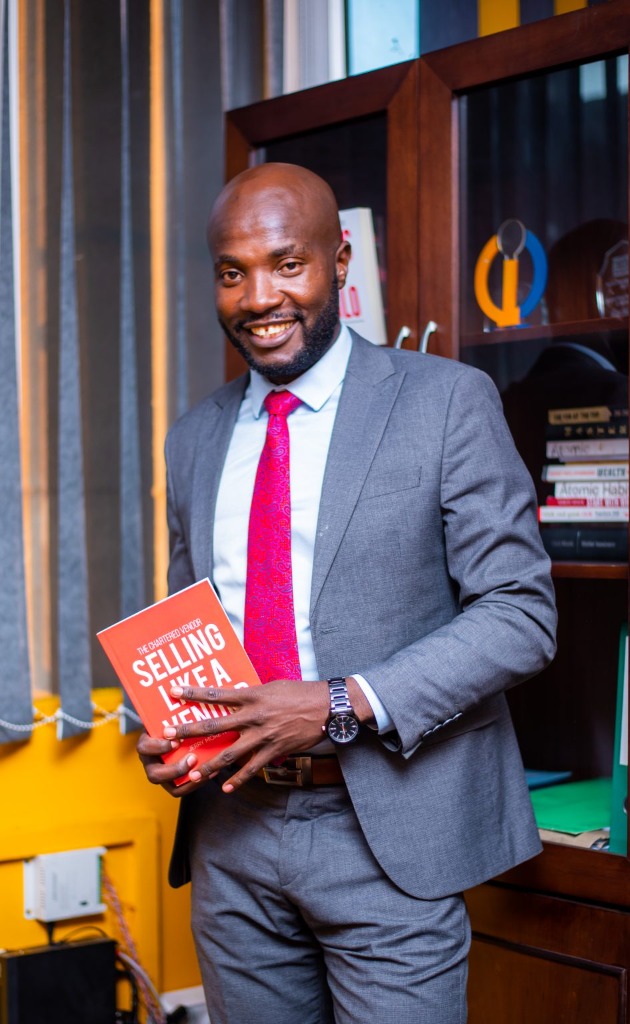
Read voraciously. Selling Like a Vendor is a starting point. Build a library. Share what you learn with your team. Make learning a team activity, not a private one.
And come train with me. The Chartered Vendor’s sales leadership programs are built on everything I have learned in 20+ years of doing this work in Africa. Not imported theory adapted poorly. Battle-tested principles developed in this market, for this market, with a 4.9 out of 5 client satisfaction rating across 500+ business transformations to back them up.
Stop waiting for your company to invest in your development before you invest in yourself. The managers who grow fastest are the ones who own their development without waiting for permission.
The Truth About Sales Leadership in Africa
Here is what I know to be true after two decades of this work.
Your team will never outgrow your leadership.
If you want a high-performing sales team, you have to become a high-performing sales leader. That is not an accident. It is a deliberate, disciplined development process that takes honest self-examination and consistent investment over time.
Sales leadership training is not a luxury for African managers. It is a strategic necessity. The companies that invest in developing their leaders are the companies that build scalable, resilient teams. Those are the companies that survive downturns, take market share, and build generational businesses that outlast their founders.
Your team is waiting for you to lead them there.
The only question is whether you are committed enough to do what it takes.